
Top Signs You Need Chimney Cleaning Service – Don’t Ignore These
Smoke rolling into the room is the sign everyone catches. The ones that actually cause expensive damage tend to whisper instead: a fire that fights you every time you light it, a musty smell that shows up in July, a gas insert whose pilot keeps quitting. If you need chimney cleaning in Torresdale PA, the honest answer is that the quiet signals matter more than the loud ones. In Torresdale’s older housing stock, those quiet signs are often the first evidence of a blocked or failing flue.
If you’d rather not climb up there yourself, call (877) 812-1596 and we’ll take a look.
Key Takeaways
- Two of the seven warning signs below mean stop using the fireplace now, not next month.
- Different seasons produce different smells for different reasons. A summer odor is not the same problem as a fall startup smell.
- Poor heating performance is often flue obstruction before it is anything else.
- Gas inserts and wood stoves announce trouble differently than open fireplaces do.
- Torresdale’s tree cover and varied rooflines make nesting and debris blockages more common here than in flat, open neighborhoods.
Why do the quiet signs of chimney trouble matter more than the obvious ones?
Because the obvious signs are late. By the time smoke backs into a room or a chimney smells like a campfire in the living room, the problem has usually been building for a while. A flue that draws poorly, a firebox with cracked joints, a crown that’s letting water in – none of those announce themselves. They just keep working, slightly worse, until something forces the issue.
In our experience, homeowners in Torresdale tend to notice the loud symptoms and book a visit immediately. The quiet ones get filed under “the fireplace is just like that.” Here’s the reframe: a fireplace that’s just like that has probably changed, and the change is information.
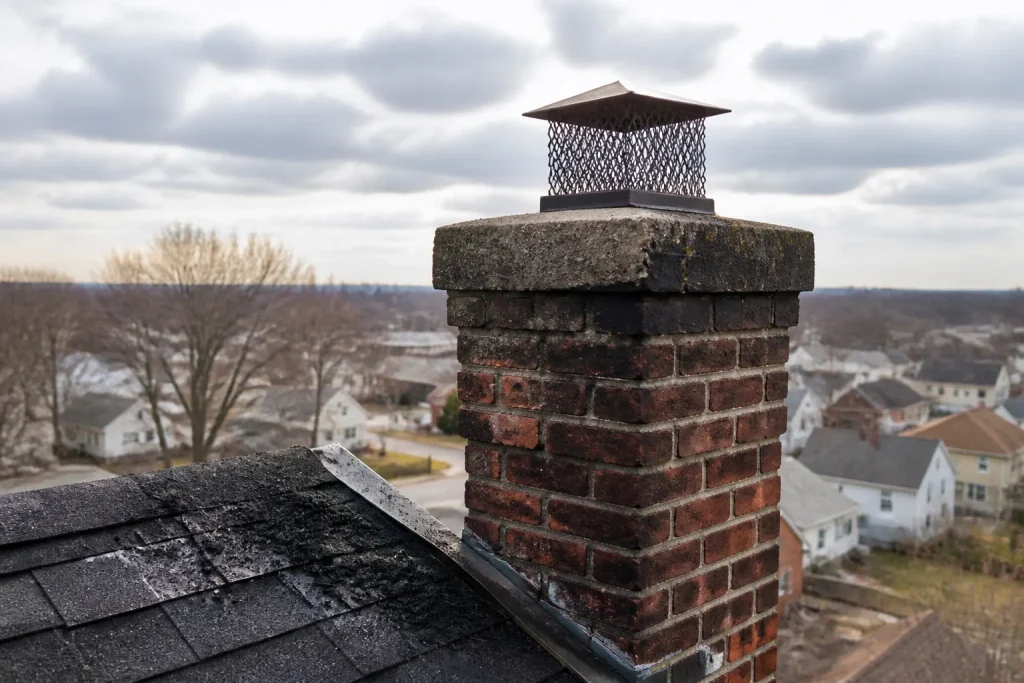
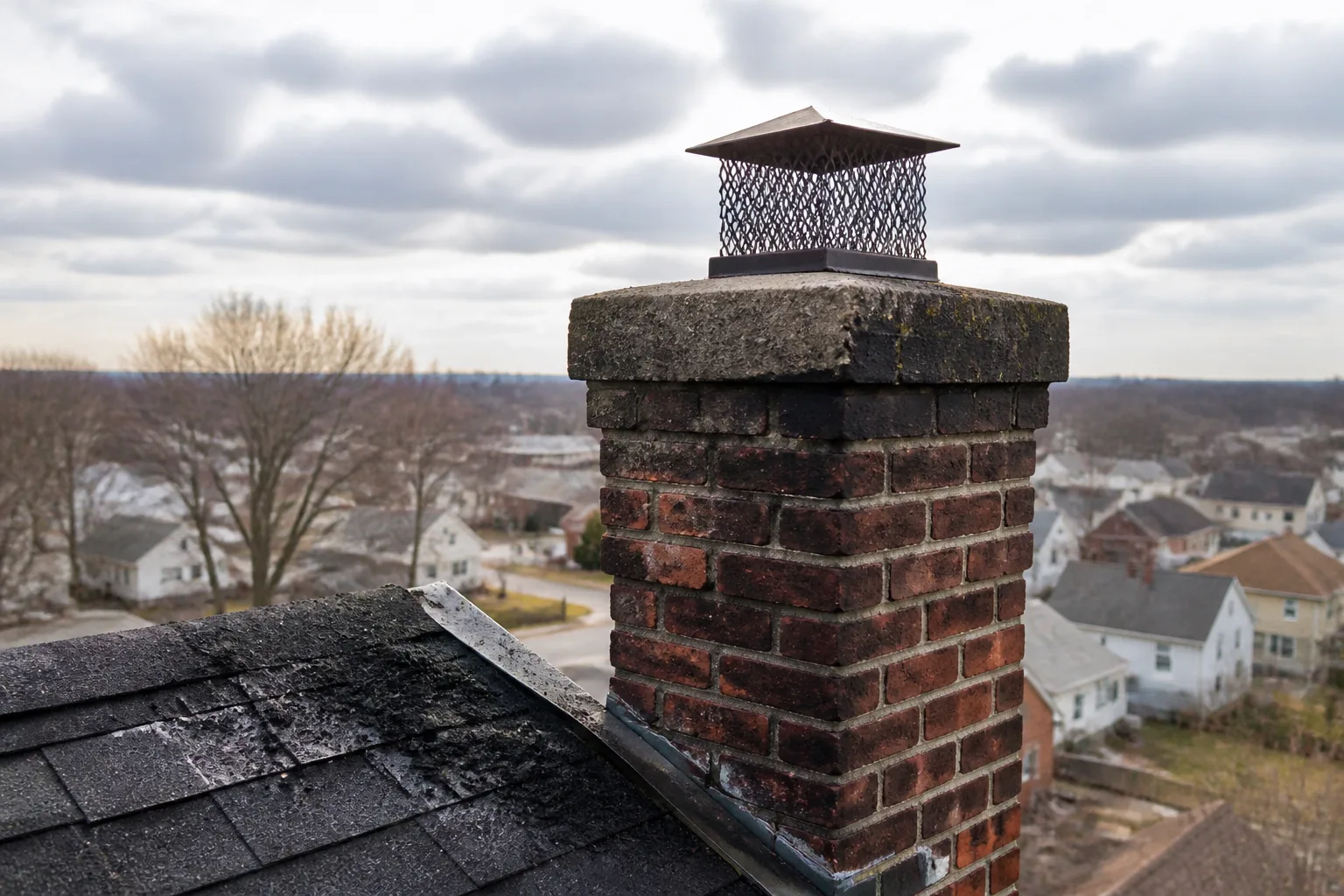
Part of the reason is how the chimney works as a single system. The cap and crown at the top, the flue tiles in the middle, the firebox and damper at the bottom – each one affects how the others perform. A compromised chimney cap & crown lets water in, which degrades flue tiles, which changes how the whole column draws. The quiet sign, say a faint damp smell, points at the top of the system while the fire is burning at the bottom.
The seven warning signs, ranked by urgency
Not every sign means shut the fireplace down today. Two of them do. Rank the rest by how quickly they’ll get worse and schedule accordingly.
- Stop using the fireplace now – smoke that won’t go up the flue, or a strong creosote smell while burning. Smoke backdrafting into the room can mean a serious blockage, and a hot, sharp, tar-like smell while the fire is lit points to creosote igniting. Extinguish the fire and get it inspected before the next burn.
- Stop using the fireplace now – visible creosote buildup at the damper or flue throat. If you can see thick, glazed, or heavily flaky deposits from the firebox, the flue is likely lined with the same. That’s the fuel load for a chimney fire. Do not test it.
- Significant urgency – a fire that’s hard to light and needs constant tending. This is the most-ignored sign on the list. It usually means airflow is restricted, either by soot and creosote accumulation or a partial blockage from a nest or debris.
- Significant urgency – water stains, rust, or white staining on the firebox or exterior chimney. Water is finding a way in, usually at the crown or the cap. Addressed early it’s a repair. Left alone it becomes flue tile damage.
- Schedule soon – a faint musty smell in summer. That’s moisture and organic material in the flue, not “the house being stuffy.”
- Schedule soon – a smoky startup smell in fall that clears after a few fires. Cold flues pull poorly, but if the smell is persistent or smoky rather than just cool, there’s buildup in the flue.
- Worth a look – a fine soot film on furniture or a dark smudge above the fireplace opening. Small but consistent. It means the system is leaking somewhere it shouldn’t.
Notice what’s missing from this list: smoke alarms, chimney fires you’ve already had, and the sound of animals in the flue. Those are obvious emergencies. The seven above are the ones that get dismissed. If you’ve had any of the top two, book a chimney sweep before your next fire.
Why does seasonal odor point at two different problems?
A musty smell in July and a smoky smell in October feel related, but they’re usually not. Summer odor is a moisture problem. Fall odor is a draft and buildup problem. Same chimney, two different parts of the system.
Summer musty smell. Warm, humid air moving slowly through a cool flue deposits a film on the interior walls, and that film is what smells. It usually means the flue has residue from previous burns and that the crown or cap is letting in moisture. Cap and crown products like the Gelco and Olympia Chimney lines we install are designed to stop the water intrusion at the source rather than masking the smell. If the odor is stronger on humid days and absent in dry weather, that’s your confirmation.
Fall smoky startup smell. Cold flues are sluggish, and every fireplace does this to some degree. But if the smell is truly smoky, ringed with soot, and takes more than a few minutes to clear, the flue is probably restricted. Fall is when buildup from last season meets a cold flue that can’t pull hard enough to clear it.
For Torresdale homeowners, the timing matters because our autumn swings between warm and cool days. That means the flue warms and cools repeatedly, which is exactly when an already-diminished draft becomes noticeable.
How does flue obstruction show up as a heating problem first?
Before a blockage causes smoke in the room, it reduces heat output. The fireplace still lights, still burns, but the heat goes up and out instead of into the room. Homeowners notice the living room feels drafty, the fire needs more wood than last year, or the room doesn’t warm up the way it used to. All three can be a restricted flue.
Here’s the mechanism: a chimney draws by pulling air up through the flue. When soot, creosote, or a nest partially blocks the flue, the draw weakens. A weak draw burns less efficiently. Bulky, incomplete combustion means more smoke, more creosote, and less heat. The loop gets worse each fire.
This is why we treat a “heating problem” complaint as a chimney question first. A professional sweep will see what’s in the flue and how it’s lined. If the flue tiles are damaged, restoration options like HeatShield can often solve it without demolition. That’s a different outcome from what a rebuild would cost, and the difference is often what the sweep was for.
Before you replace a fireplace or blame the wood, get the flue looked at. It’s cheaper to find out.
What signs are specific to gas inserts and wood-burning stoves?
These two systems route exhaust differently than an open fireplace, so the warning signs differ. A traditional open fireplace gives you a lot of visible cues – smoke, embers, the sound of draw. A gas insert or wood stove runs in a closed box, which hides a lot of what’s going on.
Gas insert warning signs
- A pilot light that keeps going out, especially on windy or cold days. That points at a draft or venting issue, not just a worn thermocouple.
- Soot marks above the insert or around the vent. A gas insert should burn clean. Soot means incomplete combustion or restricted venting.
- A faint exhaust smell when the unit is running. Any gas smell means stop using it and get it inspected. Carbon monoxide is a genuine risk here, not a scare tactic.
- Condensation on the glass that doesn’t clear within a few minutes. Excess moisture in the exhaust can indicate a blocked or improperly sized flue.
Wood stove warning signs
- Smoke puffing back into the room when you open the door. That’s a weak draft, and in a wood stove it gets worse with buildup.
- A hot, sharp smell or a stove that won’t hold temperature. That can signal a chimney fire in progress. Shut the stove down and get it inspected.
- Uneven burn across the firebox. Usually means the flue is partially restricted and drawing from one side.
A wood-burning insert on an older masonry chimney deserves particular attention. The insert may be newer than the flue it exhausts into, and the liner is what matters. A DuraFlex liner sized and installed correctly is how we bring an older flue up to modern expectations on an insert. A sweep-only service can’t do that.
Why does Torresdale’s tree cover create more blockages than national averages suggest?
The neighborhoods here have mature trees overhanging many rooflines, and those trees bring wildlife. Birds, squirrels, and raccoons investigate chimneys for nesting, and they’re not picky about which cap is on top. A chimney without a proper cap – or with a cheap hardware-store cap that has warped or rusted – is an open invitation.
The roofline profiles matter too. Torresdale’s housing stock includes a lot of pitched roofs with chimneys set low against the ridge, and those chimneys sit in the wind shadow of the taller trees. Debris settles instead of blowing clear. When a nest or leaf pack sits in a flue, the first symptom is usually a fire that won’t pull properly.
We install professional-grade caps from Famco and Olympia Chimney, plus Copperfield chimney supplies, because a cap is the single most useful piece of hardware on top of the chimney. Not all caps protect equally. Ours are sized for the flue and built to sit above the crown rather than on it.
A spring or early-fall sweep catches nesting debris before it becomes a draw problem. That’s the timing we recommend for Torresdale specifically.
When to call a pro
If you’re comfortable checking the firebox for obvious creosote and the damper opens and closes freely, that’s a good baseline. Beyond that, call. Especially for anything on the top of the list above, or anything involving a gas insert. We don’t recommend homeowners get on the roof or open up a flue to inspect. It’s the kind of work where a trained look is worth more than a brave one.
Our technicians have up to 8 years of experience and work the full system – cap, crown, liner, flue, and firebox together. That matters when a quiet sign could be a simple sweep or a damaged liner, and you won’t know which until someone looks. Call (877) 812-1596. We answer 24/7. Fast dispatch from 7am to 7pm, Sunday through Friday. Estimates are free.
Related services in Torresdale: if a quiet sign turns out to be structural, our chimney repair service covers flue tile damage, crown failure, and firebox cracks. For a routine inspection or annual sweep, see our main Chimney Sweep Torresdale page.
The Bottom Line
The dangerous signs aren’t the loud ones. A fire that fights you, a smell in July, a pilot that keeps quitting – these are the early warnings that matter, and in Torresdale’s older housing stock they’re often pointing at a flue that’s blocked or failing. Two of them mean stop burning. The rest mean book a sweep before the next season.
If you’re in Torresdale and need help, Chimney Sweep Torresdale offers free estimates. Call (877) 812-1596. We answer 24/7. Fast dispatch from 7am to 7pm, Sunday through Friday.
Frequently Asked Questions
Most wood-burning chimneys should be swept annually, and more often if you burn heavily. Gas inserts and wood stoves still need annual inspection. If you’re not sure how much buildup you have, get it looked at rather than guessing. Call (877) 812-1596 for a free estimate.
No. Smoke backdrafting into the room usually means a serious blockage, and it should be inspected before you light another fire. Extinguish the fire, open a window for ventilation, and call. We answer 24/7 at (877) 812-1596.
Usually yes. A faint musty smell in July comes from moisture and organic residue in the flue. It points at either buildup or a crown and cap issue letting water in. It’s worth a look before fall. Call (877) 812-1596 – estimates are free.
Stop using the fireplace and get it inspected. Thick, glazed creosote in the firebox usually means the flue is lined with it too, which is the fuel load for a chimney fire. A sweep is the correct answer here, not a workaround. Call (877) 812-1596 to book.
Written by the team at Chimney Sweep Torresdale.
Need Chimney Cleaning Help?
Call Chimney Sweep Torresdale - the local pro we connect you with is licensed and insured, here with fast help in Torresdale.
(877) 812-1596